Spatial Dialogues | teamLab

メイン画像
Spatial Dialogues
AFGELOPEN TENTOONSTELLING
2024.6.06(Thu) - 8.30(Fri)Beit Zenel, Jeddah
メイン画像
Spatial Dialogues
AFGELOPEN TENTOONSTELLING
2024.6.06(Thu) - 8.30(Fri)Beit Zenel, Jeddah

Kunstwerken

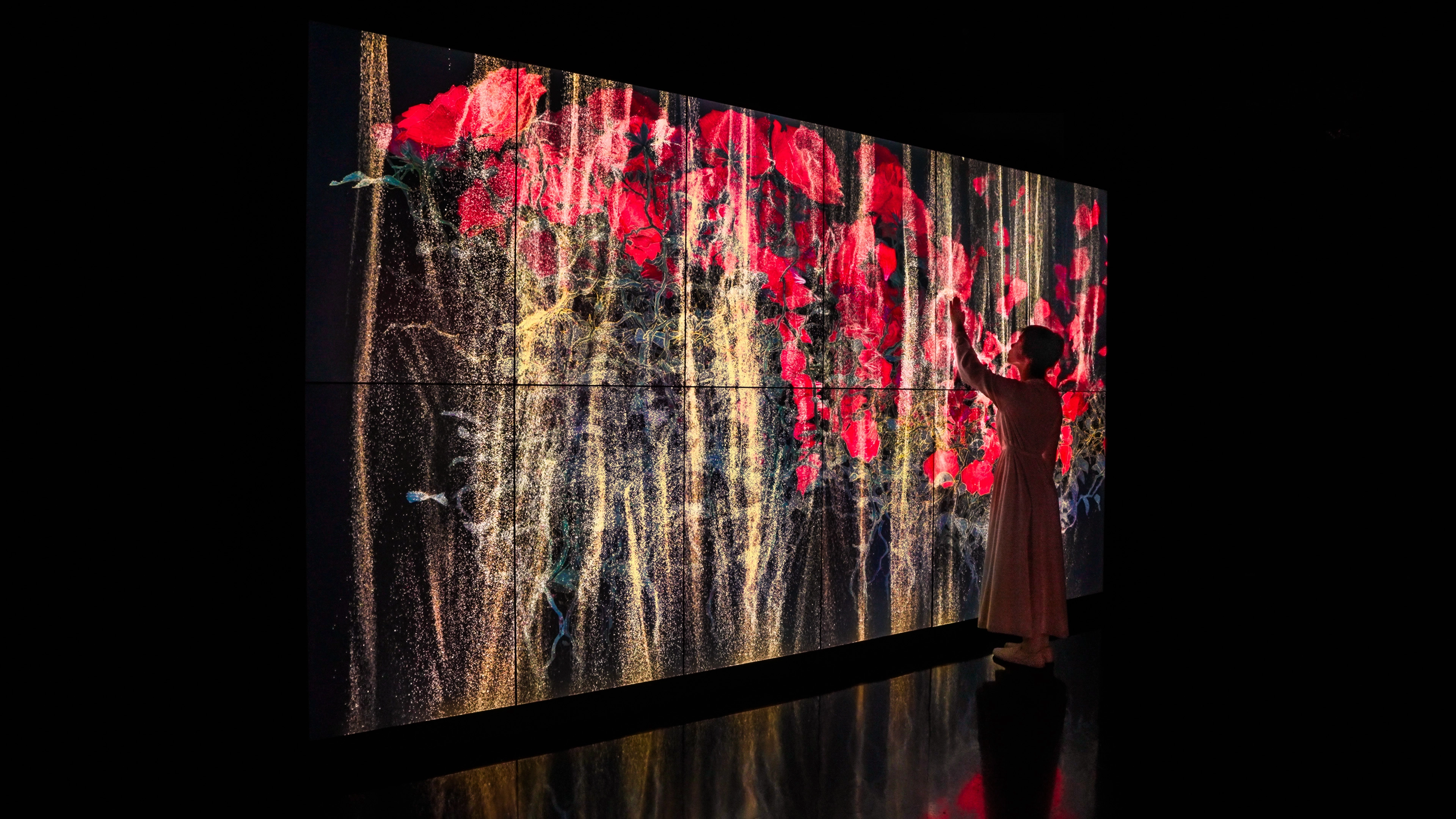
Persistence of Life in the Sandfall

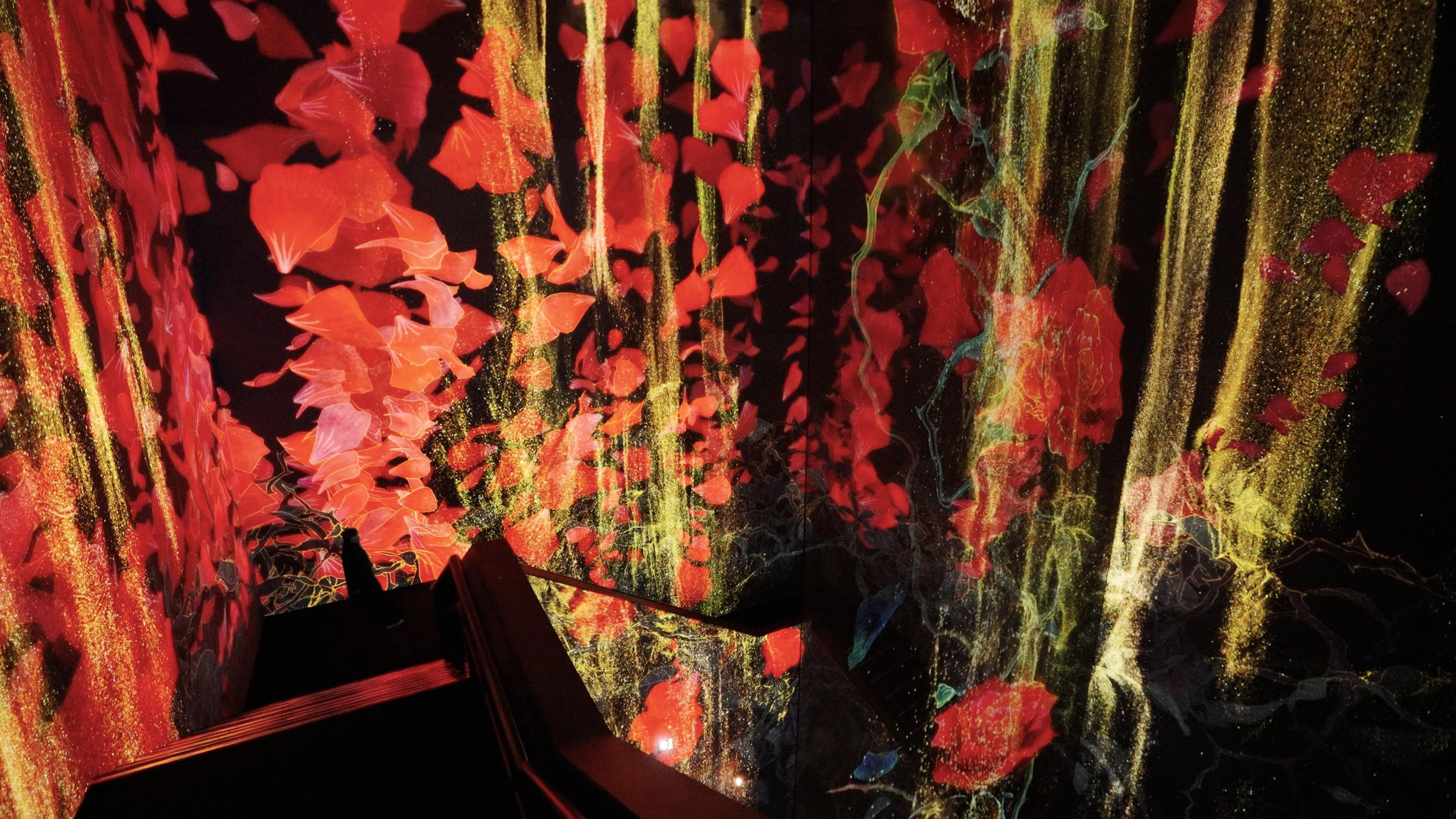
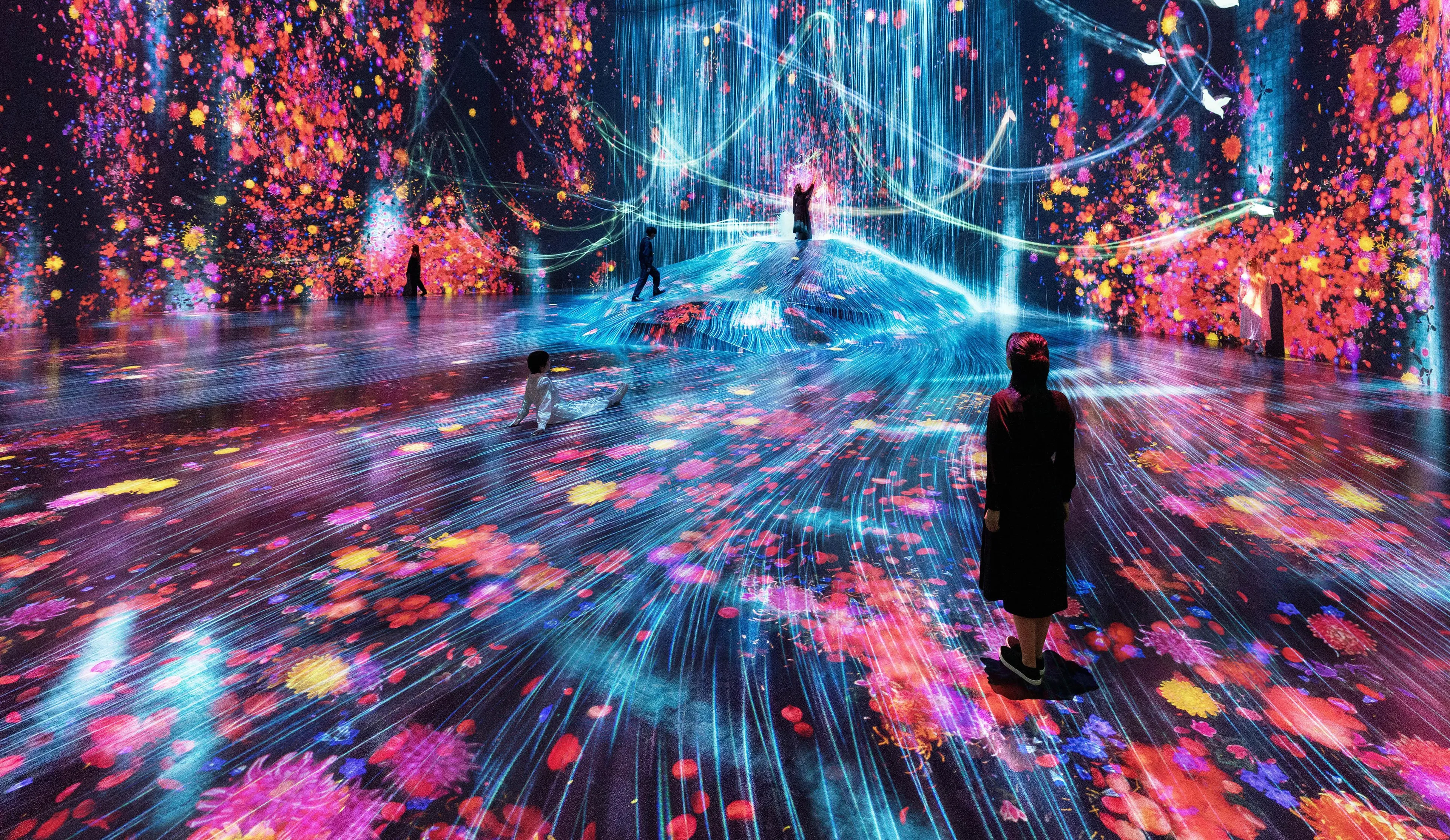
When people approach the flowers, they scatter and die. When they approach the sand, the falling sand breaks up.The short time of the falling sand, the long time of the repeated life and death of the flowers, and the time of people's bodies - all these different times intersect and overlap.
The pictorial space of flowers drawn through Ultrasubjective Space differs from a picture plane flattened by a lens or by single-point perspective. In images or paintings produced by a lens or single-point perspective, space appears behind the picture plane; the space that opens there and the space the viewer inhabits are split, and the picture plane becomes a boundary surface. The viewpoint is fixed at a single point, and the body is lost. A picture plane formed by Ultrasubjective Space is not a boundary that separates where we are from the world of the artwork. The world of the artwork is not outside a window; it appears as a single field that is continuously connected, without boundary, to the space in which the viewer’s body exists. Moreover, any position — front, back, left, or right — can become a viewpoint, so viewpoints exist in infinite number, and the viewer regains a free body.
Not bound to a single point, the viewer moves their body and lets their gaze roam freely, continually re-composing the world of the work as it changes over time, and building the pictorial space of flowers within themselves.In that moment, the work becomes a subjective, embodied spatial art in which the viewer walks inside that pictorial space.

Memory of Waves

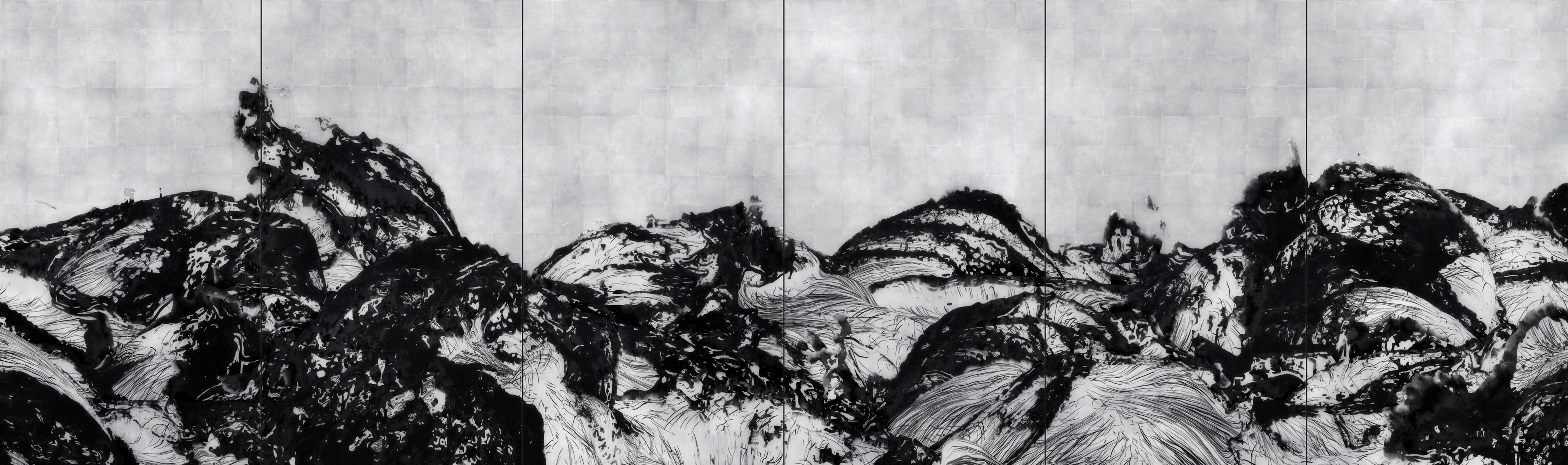
All oceans are connected to each other, and so are all the waves in this world.

In classical East Asian art, waves are often expressed using a combination of lines. These waves created by lines allow us to realize that each wave is one part of a larger flow, and conveys life as though the waves are a living entity.

When the waves rise, we can feel a powerful breath of life, as though life is blooming. It feels as though each wave has a life of its own. But when the waves collapse and disappear, we realize, with a sense of fragility, that they were a part of the ocean. And that ocean is connected to all of the other oceans. In other words, all of the waves in the world are connected to each other.
The waves seem alive because life is like a rising wave. It is a miraculous phenomenon that continuously emerges from a single, continuous ocean.

The waves are expressed through a continuous body of countless water particles. The interactions of particles are calculated, and then the movement of water is simulated in three-dimensional space. Lines are created along the trajectories of the water particles, and drawn on the surface layer of the three-dimensional waves.

The lines are created with what teamLab refers to as Ultrasubjective Space. In contrast to space that is created through, or cut out by, lenses and perspective, Ultrasubjective Space does not fix the viewer’s viewpoint and in turn frees the body. The wall that the waves are seen on does not become a boundary between the viewer and the artwork, and the artwork space is continuous with the space of the viewer’s body.

Dissipative Figures - 1000 Birds, Light in Dark

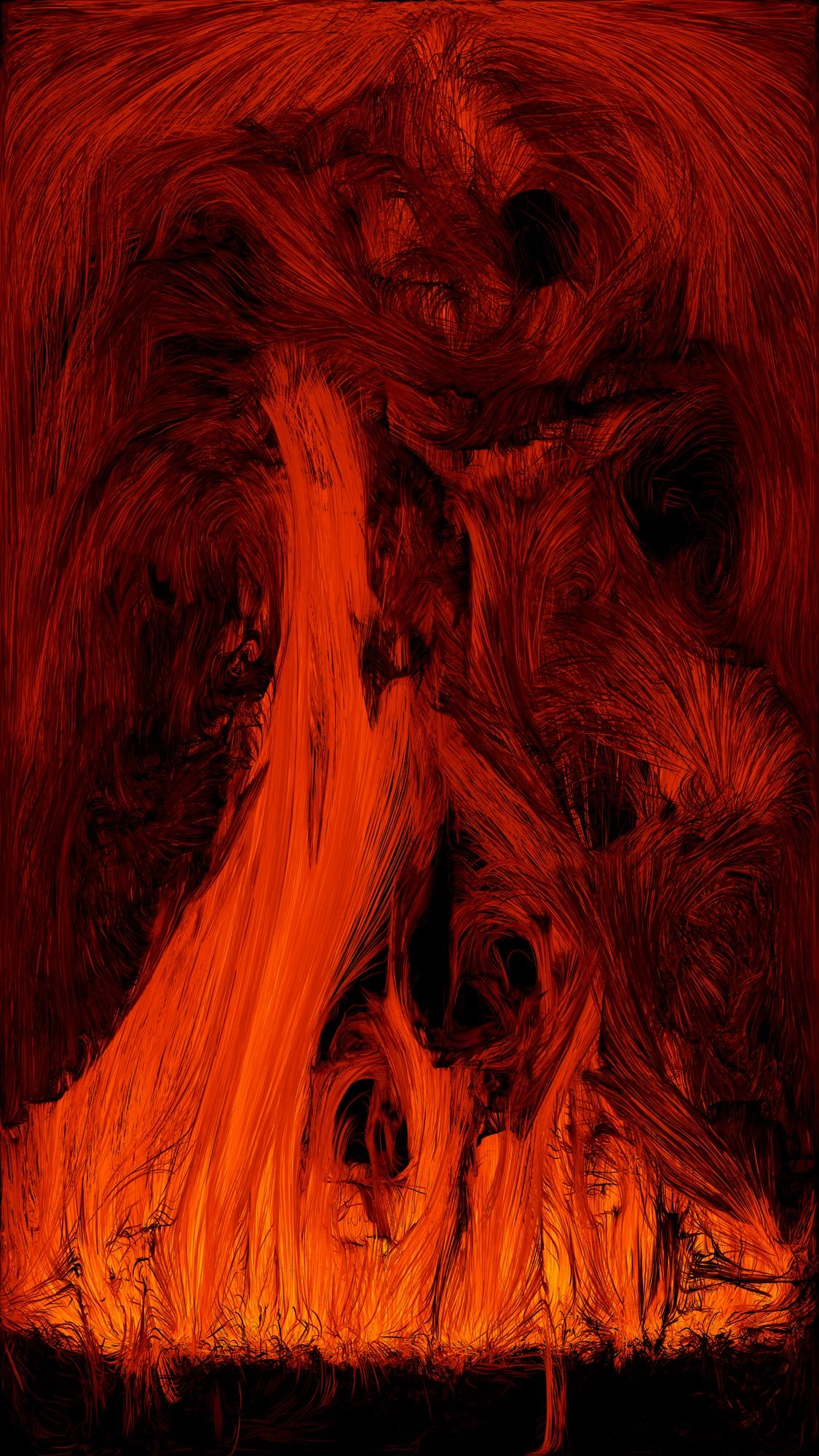
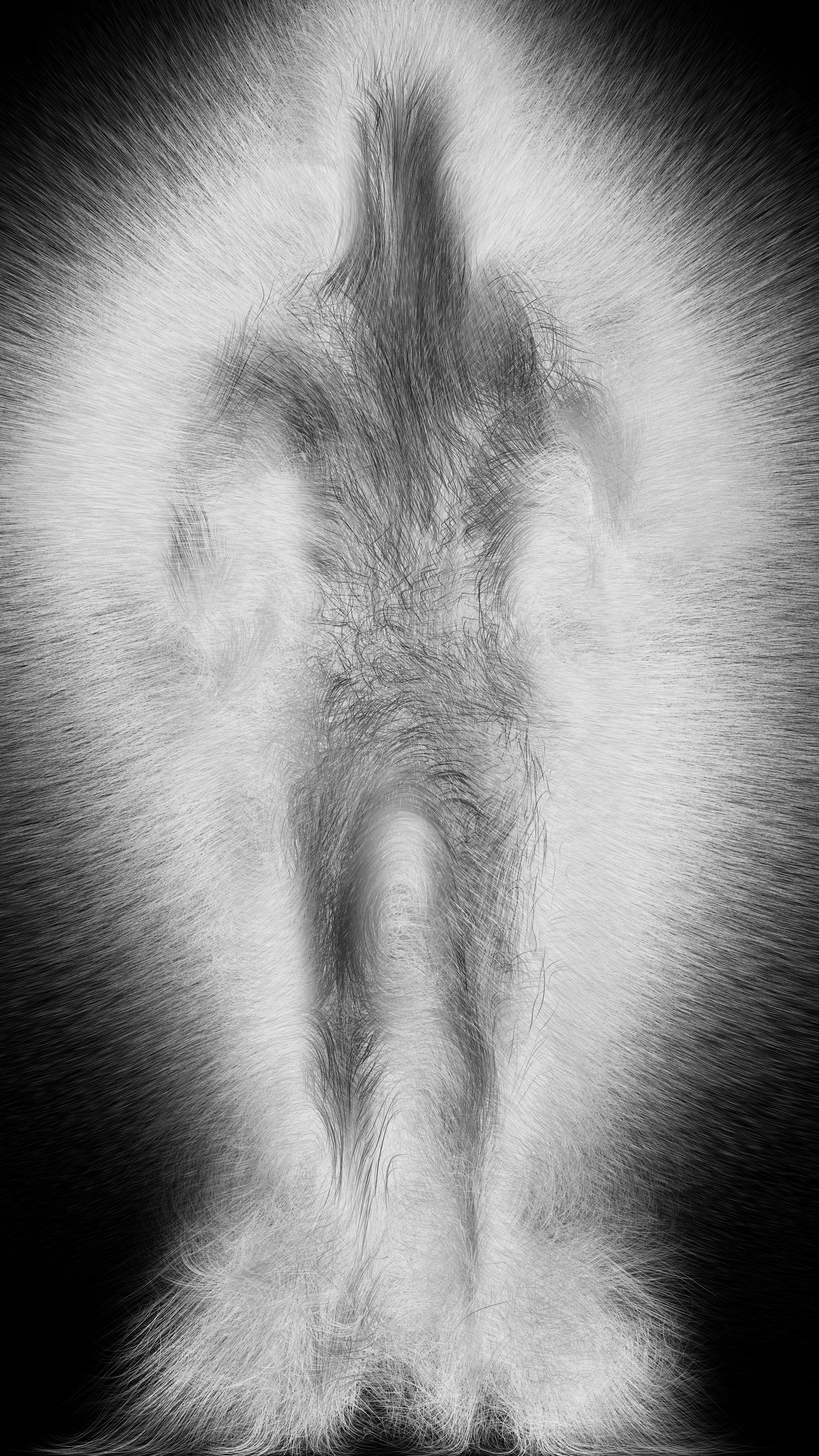
The contours of life’s existence are not the surface boundary of the body, but something ambiguous that includes the environment that is continuous with it.As long as people live, they dissipate energy and affect the environment, such as the flow of air.In this artwork, the existence of the birds are depicted through the energy they dissipate into the world.
Being consists of the mind, the body, and the environment that is continuous with them.
Objects like stones and man-made creations so far have maintained a stable structure on their own. But life is different. Whereas a stone can continue to exist in a closed box, sealed off from the outside world, life would cease to exist.
Life is like a vortex created in the ocean. A vortex forms and exists in a flow of matter, and the boundaries of its existence are ambiguous.  
Although a vortex is steady, it is constantly moving and swelling like a powerful life-form. The vortex cannot maintain a stable structure on its own; rather, it is created and sustained by water that continuously flows inwards and outwards.
The same is true of life. It consumes external matter and energy as food and discharges it, sustaining its ordered structure as the energy dissipates. In other words, life does not exist by itself. It is the environment that is continuous with it that maintains the structure of life. 
Life is a miraculous phenomenon that emerges from a flow in an open world. Like an ocean vortex, it is an existence with ambiguous boundaries in an infinite continuity.
To be alive is to be inseparable from the world, constantly dissipating energy into it.

Dissipative Figures – Human, Light in Dark

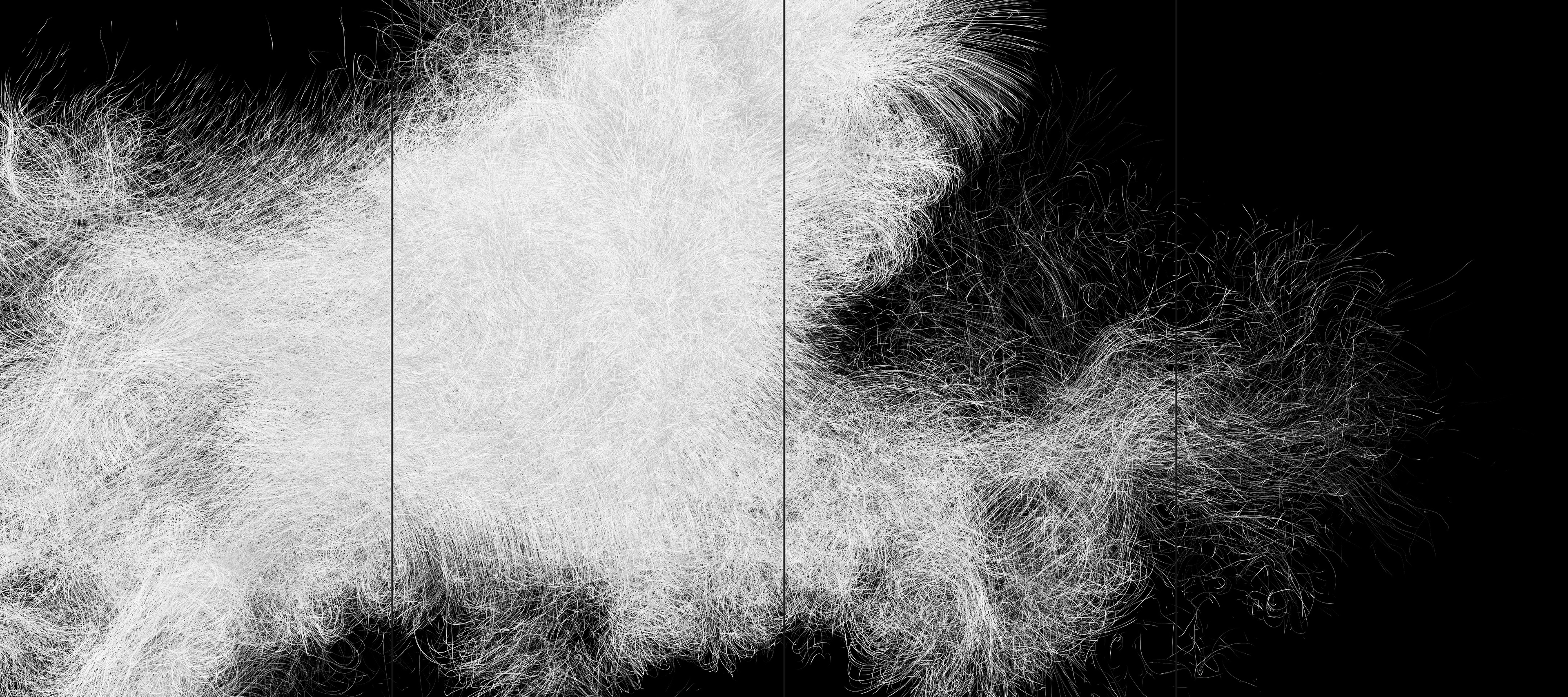
The contours of life’s existence are not the surface boundary of the body, but something ambiguous that includes the environment that is continuous with it.
As long as people live, they dissipate energy and affect the environment, such as the flow of air.
In this artwork, the existence of a person is depicted through the energy dissipated by people into the world for as long as they live.

Being consists of the mind, the body, and the environment that is continuous with them.

Objects like stones and man-made creations so far have maintained a stable structure on their own. But life is different. Whereas a stone can continue to exist in a closed box, sealed off from the outside world, life would cease to exist.

Life is like a vortex created in the ocean. A vortex forms and exists in a flow of matter, and the boundaries of its existence are ambiguous.  

Although a vortex is steady, it is constantly moving and swelling like a powerful life-form. The vortex cannot maintain a stable structure on its own; rather, it is created and sustained by water that continuously flows inwards and outwards.

The same is true of life. It consumes external matter and energy as food and discharges it, sustaining its ordered structure as the energy dissipates. In other words, life does not exist by itself. It is the environment that is continuous with it that maintains the structure of life.

Life is a miraculous phenomenon that emerges from a flow in an open world. Like an ocean vortex, it is an existence with ambiguous boundaries in an infinite continuity.

To be alive is to be inseparable from the world, constantly dissipating energy into it.

Life Survives by the Power of Life II

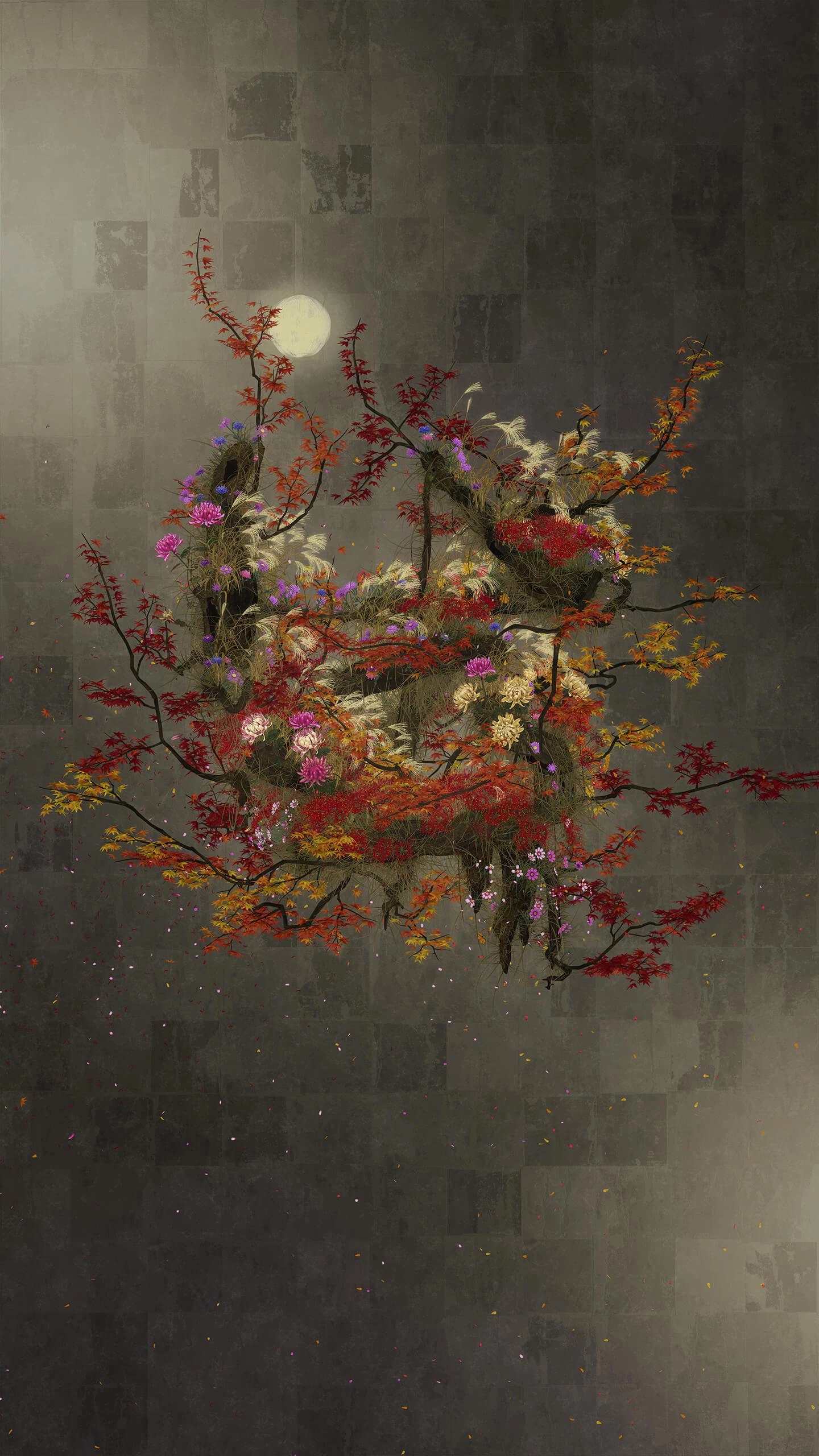
Life Survives by the Power of Life was released in 2011, the year of the Great East Japan Earthquake, where an earthquake, tsunami, and nuclear power plant accident overlapped. We have continued to create this artwork since its release in 2011, and over the course of 10 years, it has developed into a new artwork in which the transition of flowers and plants throughout a whole year repeats.
Self and the environment may appear to be two things, but in reality they are one and cannot be separated. The opposite of division may not be to integrate separate things, but to realize that what appears to be two were originally one.
The blessings and threats of nature, and the blessings and threats of civilization, are continuous and connected. There is no absolute malice anywhere, and yet not everything can be settled with just pleasant words. There is no easy solution, and our emotions are complex. Even so, we at teamLab want to affirm "Life" in all situations. Life is beautiful.
And life and death also appear to be two things, but in reality they cannot be separated. Within a long period of time, life has been supported by death, and death has supported new life, as life has been continuous.
In this artwork, the character "生" (sei), which means life and living, is drawn three-dimensionally in space. The brush strokes evoke traces of life, and on the brush strokes hundreds of flowers and plants are born, bloom, scatter, and change.
The artwork is drawn through Ultrasubjective Space, the picture plane does not become a boundary that separates the world of the artwork and the space where the viewer is. The artwork space transcends the picture plane and is continuous with the space in which the viewer's body exists. Viewpoints exist in infinite numbers, and no matter where you cut out the picture plane, the space is maintained. Because all of the details continue to change constantly, the viewer's gaze never stays fixed on a single point but moves around.
By moving their gaze, the viewer continually re-composes the world of the artwork as it changes over time, and builds pictorial space within themselves.
Over teamLab
teamLab (f. 2001) is an international art collective. Their collaborative practice seeks to navigate the confluence of art, science, technology, and the natural world. Through art, the interdisciplinary group of specialists, including artists, programmers, engineers, CG animators, mathematicians, and architects, aims to explore the relationship between the self and the world, and new forms of perception. In order to understand the world around them, people separate it into independent entities with perceived boundaries between them. teamLab seeks to transcend these boundaries in our perceptions of the world, of the relationship between the self and the world, and of the continuity of time. Everything exists in a long, fragile yet miraculous, borderless continuity. teamLab’s works are in the permanent collection of the National Gallery of Victoria, Melbourne; Art Gallery of New South Wales, Sydney; Art Gallery of South Australia, Adelaide; National Gallery of Australia, Canberra; Amos Rex, Helsinki; Museum of Contemporary Art, Los Angeles; Asian Art Museum, San Francisco; Borusan Contemporary Art Collection, Istanbul; and Asia Society Museum, New York, among others. teamlab.art Biographical Documents

Venue Details

Spatial Dialogues

Looptijd

2024.6.06(Thu) - 8.30(Fri)

Openingstijden

Mon-Sat 17:00 - 23:00

Sluitingsdagen

Sunday

Route

Adres

Athr Gallery
Al Bayaa Sq, Al-Balad, Jeddah

Adres in lokale taal:

7402 زقاق المتحف، 3012، حي البلد،, Jeddah 22236

Contact

Athr Gallery