Resonant Collective Sculpture
2009
Where Bodies, Environments, and Works Resonate as One Continuous Field
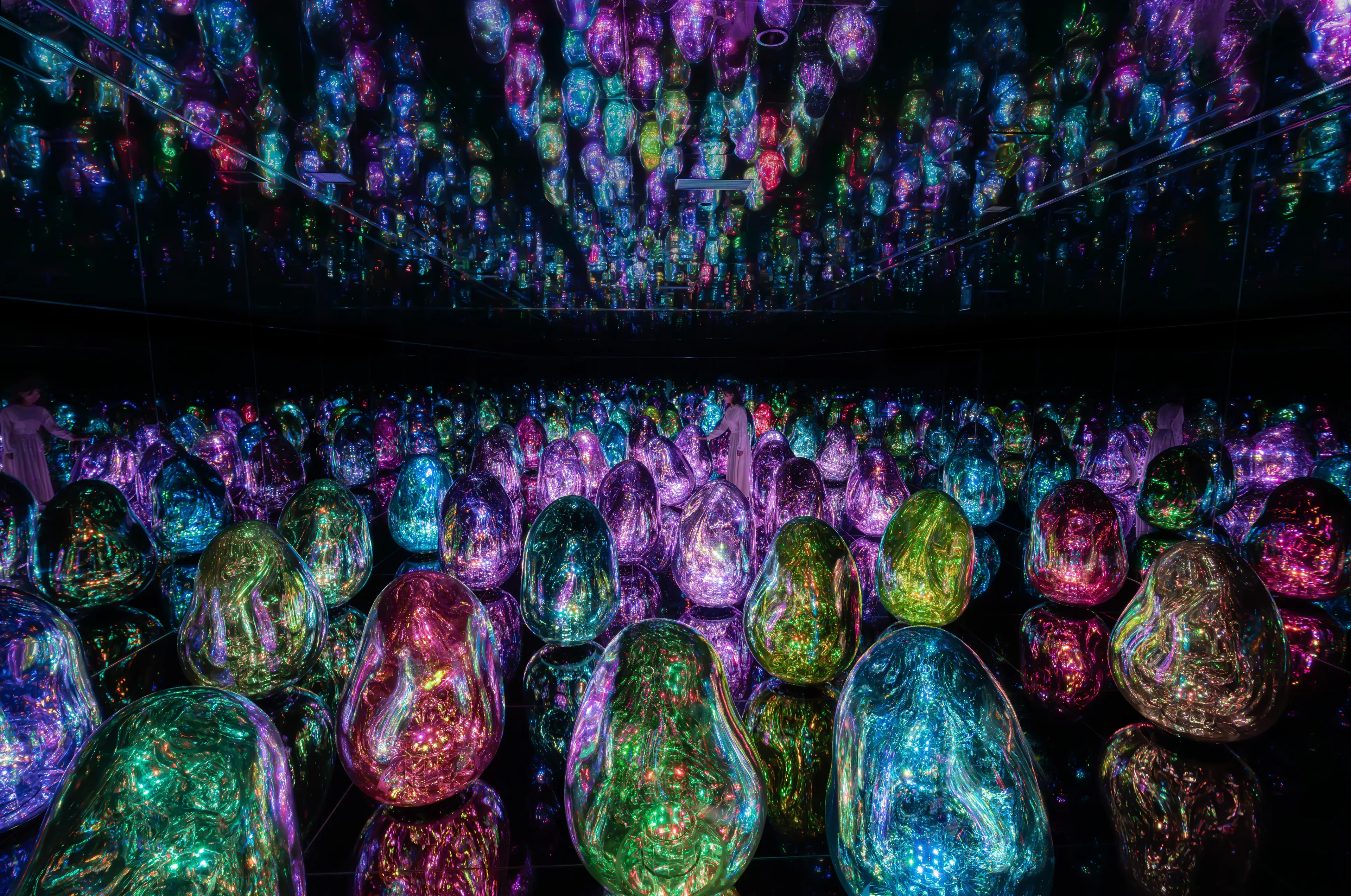
Although each individual sculpture is an autonomous physical entity, they respond to one another, forming a single continuous field.
Physical actions such as being pushed by a body, moved by others, and when outdoors, the effects of the environment such as wind and rain, the behavior of wild animals, interactions with adjacent sculptures within the same group, and other surrounding artworks—all of these become triggers for resonance. The light, sound, and movement generated in a single sculpture do not remain closed within that individual entity, but there occurs a chain reaction to nearby sculptures, and further into surrounding artworks and spaces, continuing throughout the whole.
Here, it is not only humans that move the artwork. The body, others, the environment, and the artwork are connected to the same ecosystem and responsive field—individual sculptures do not exist on their own as a complete entity, but continue to exist in relationships.
This structure is an attempt to expand sculptures from solid objects, as autonomous individuals, into a network-like existence that continues to be generated within the relationships among the body, others, the environment, and other artworks. In this ecological responsive field, where humans and non-humans participate together, the boundaries of the sculpture do not remain within the contours of individual physical objects.
FEATURED WORKS
Resonating Microcosms - Solidified Light
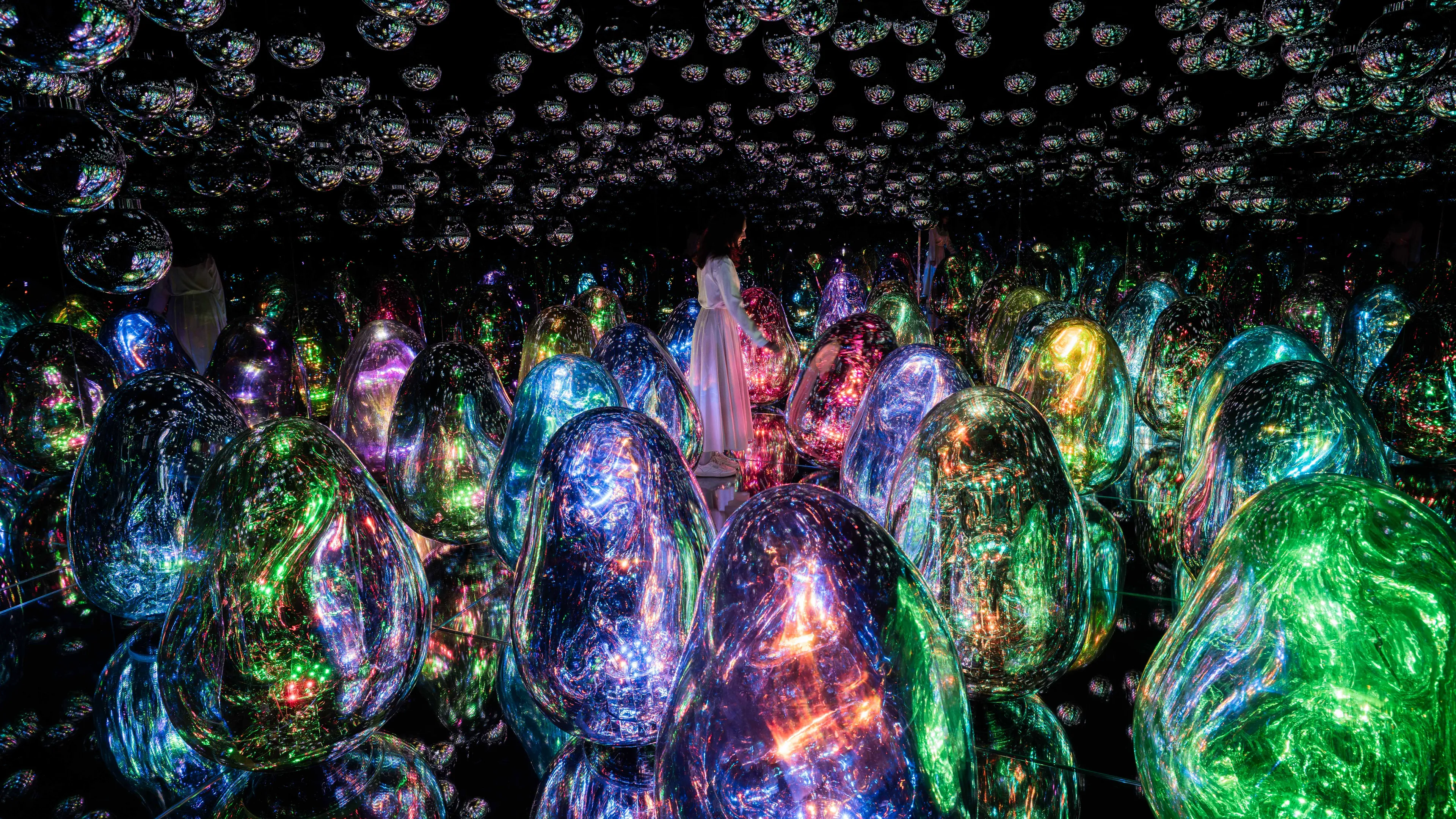
teamLab, 2022, Interactive Installation, Endless, Sound: Hideaki Takahashi, teamLab, Production Support: Hirohito Saito (OryZa Design), Shinya Yoshida (SYD INC.)
When each ovoid is pushed over by a person, it shines brightly and emits a sound tone as it rights itself. The surrounding ovoids also respond one after another, and the same light color and tone continues to resonate out. The artwork space is transformed by people's actions, making people and the environment part of the artwork.
The patterns of color that appear within the ovoid exist as infinite possibilities until they are seen, and only at the moment it is viewed from a certain perspective is a single appearance fixed. They continue to transform in response to the viewer's moving body, the fluctuations of the sculpture itself, and the surrounding environment.
This artwork is part of the Resonant Collective Sculpture series, continuing from teamLabBall (2009-). Although each individual sculpture is an autonomous physical existence, they respond to one another, forming a single continuous field.
In this series, physical actions such as being pushed by a body, moved by others, and when outdoors, the effects of the environment such as wind and rain, the behavior of wild animals, interactions with adjacent sculptures within the same group, and other surrounding artworks—all of these become triggers for resonance. The light, sound, and movement generated in a single sculpture do not remain closed within that individual entity, but there occurs a chain reaction to nearby sculptures, and further into surrounding artworks and spaces, continuing throughout the whole.
Here, it is not only humans that move the artwork. The body, others, the environment, and the artwork are connected to the same ecosystem and responsive field—individual sculptures do not exist on their own as a complete entity, but continue to exist in relationships.
This structure is an attempt to expand sculptures from solid objects, as autonomous individuals, into a network-like existence that continues to be generated within the relationships among the body, others, the environment, and other artworks. In this ecological responsive field, where humans and non-humans participate together, the boundaries of the sculpture do not remain within the contours of individual physical objects.
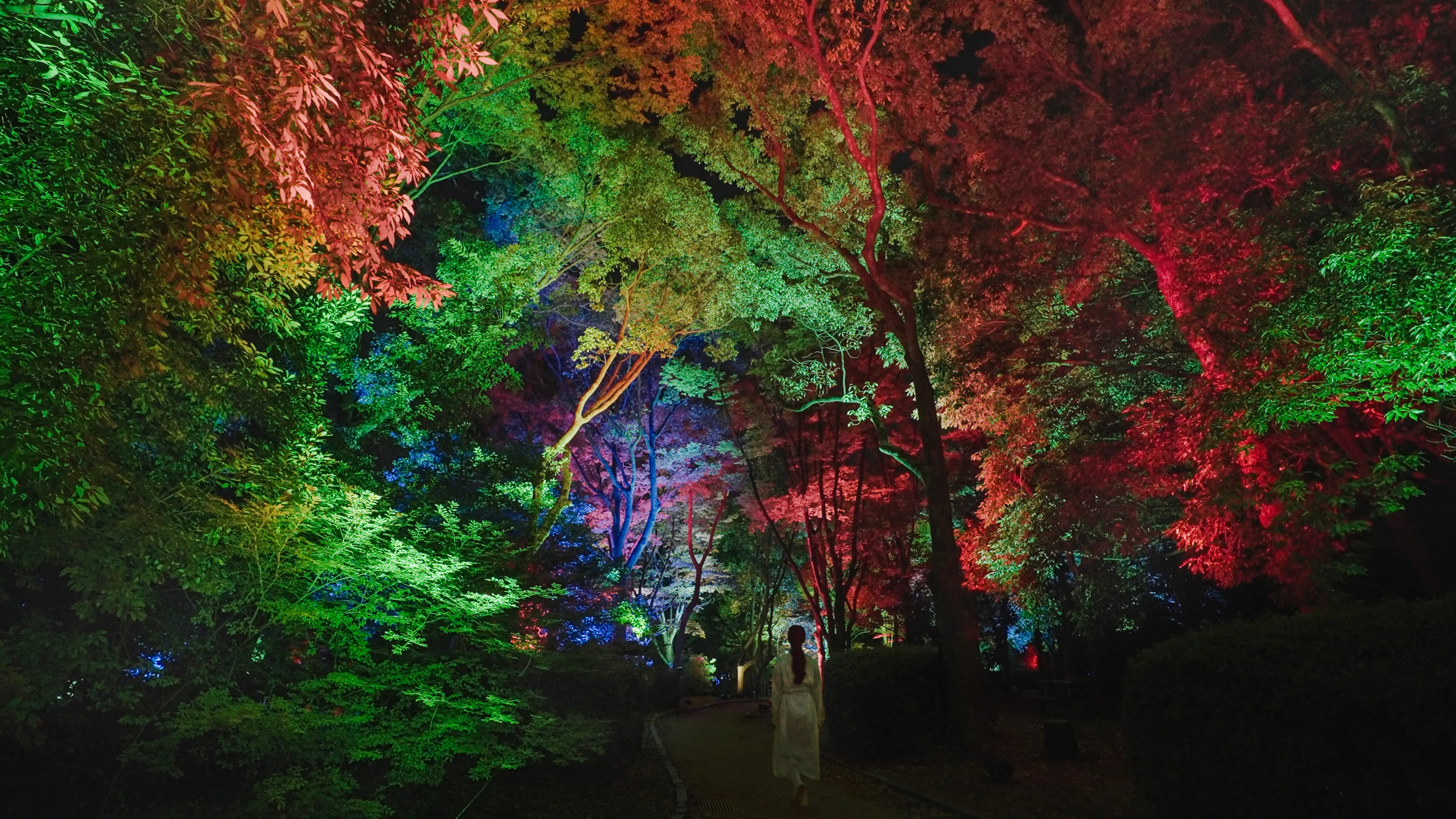
teamLab, 2014-, Interactive Installation, Sound: Hideaki Takahashi, teamLab
每棵樹木在人們或野生動物接近時,都會發出強烈的光芒並鳴響音色。周邊的樹木也會接連呼應,使光芒與音色不斷連續傳播。
樹木也會與周邊的作品相互呼應,彼此讓光芒與音色連續延展。當光芒從樹木的深處湧來時,便意味著在那一側人或是野生動物存在。身體、他者、野生動物的行為舉止,以及周邊的作品,都會讓作品空間產生變容,使人們與環境也成為作品的一部分。
本作品是 Digitized Nature 藝術項目的一部分。Digitized Nature 是一項在不破壞自然的前提下,讓自然以其本來的面貌直接轉變為藝術的嘗試。
森林樹木自身的姿態、質感和變化包含著久遠的時間、生命的連續性以及與生態系統的關系。樹木本身既是生態系統的一部分,同時其表面和內部也孕育著生命,構成了一個生態系統。與人類制造的物體不同,它存在的輪廓是模糊的。
當傳感、網絡、光和聲音等非物質材質疊加在這些樹木上時,樹木在保持其原本面貌的同時,彼此相互呼應,作為群體形成一個連續的場域。這並不是人類將自然作為原材料來進行雕刻,而是在漫長時間和生態系統裡形成的樹木,在保持其原本面貌的同時,作為相互呼應的群體雕塑而矗立起來的嘗試。
在這裡,並不只有人類才會讓作品產生變化。身體、他者、野生動物、環境、樹木以及周邊的作品,都被連接到同一個生態系統式的呼應場域中。每棵樹木並非作為單體而完結,而是在關系中持續存在。人們不僅是在觀看作品,更是走入樹木的呼應之中,通過光芒與音色的連續性,去感受他者、野生動物以及環境的存在。
這一結構將自然呈現為一個與人們和環境共同變化的生態系統式的場域,而不是一個存在於作品外部的對像。
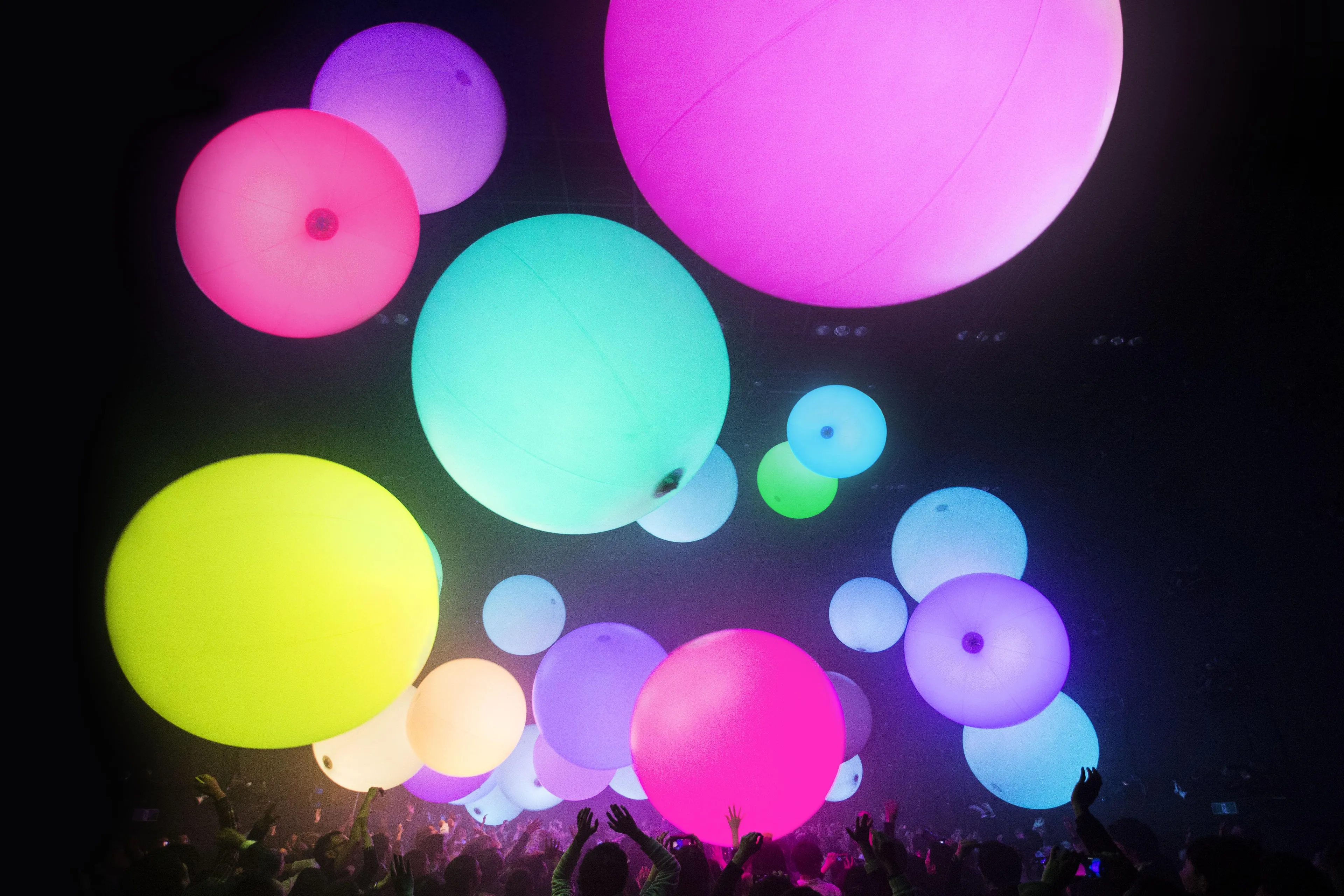
teamLab, 2009, Interactive Ball