Mifuneyama Rakuen Hotel | teamLab

メイン画像
ロゴ画像
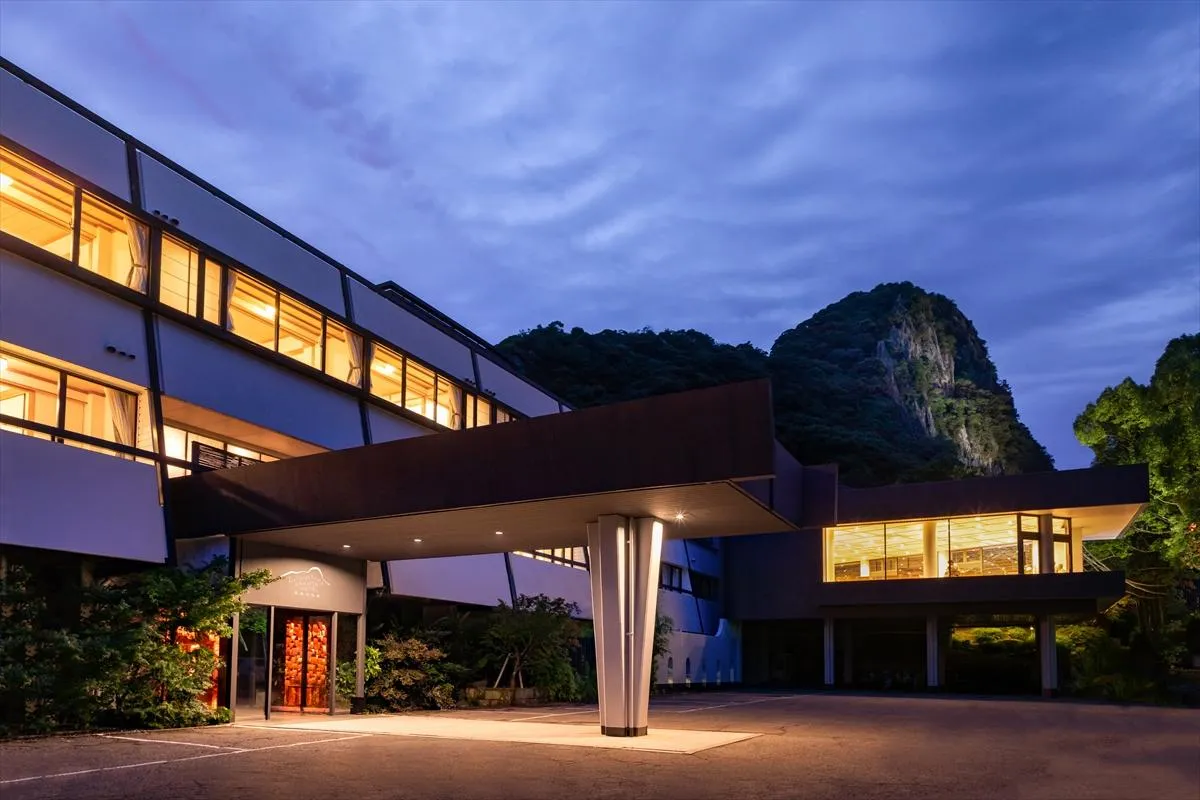
2018.7.19(Thu) - Mifuneyama Rakuen Hotel, Takeo Hot Springs, Kyushu

Hotel

メイン画像
ロゴ画像
2018.7.19(Thu) - Mifuneyama Rakuen Hotel, Takeo Hot Springs, Kyushu

Hotel

งานศิลปะ

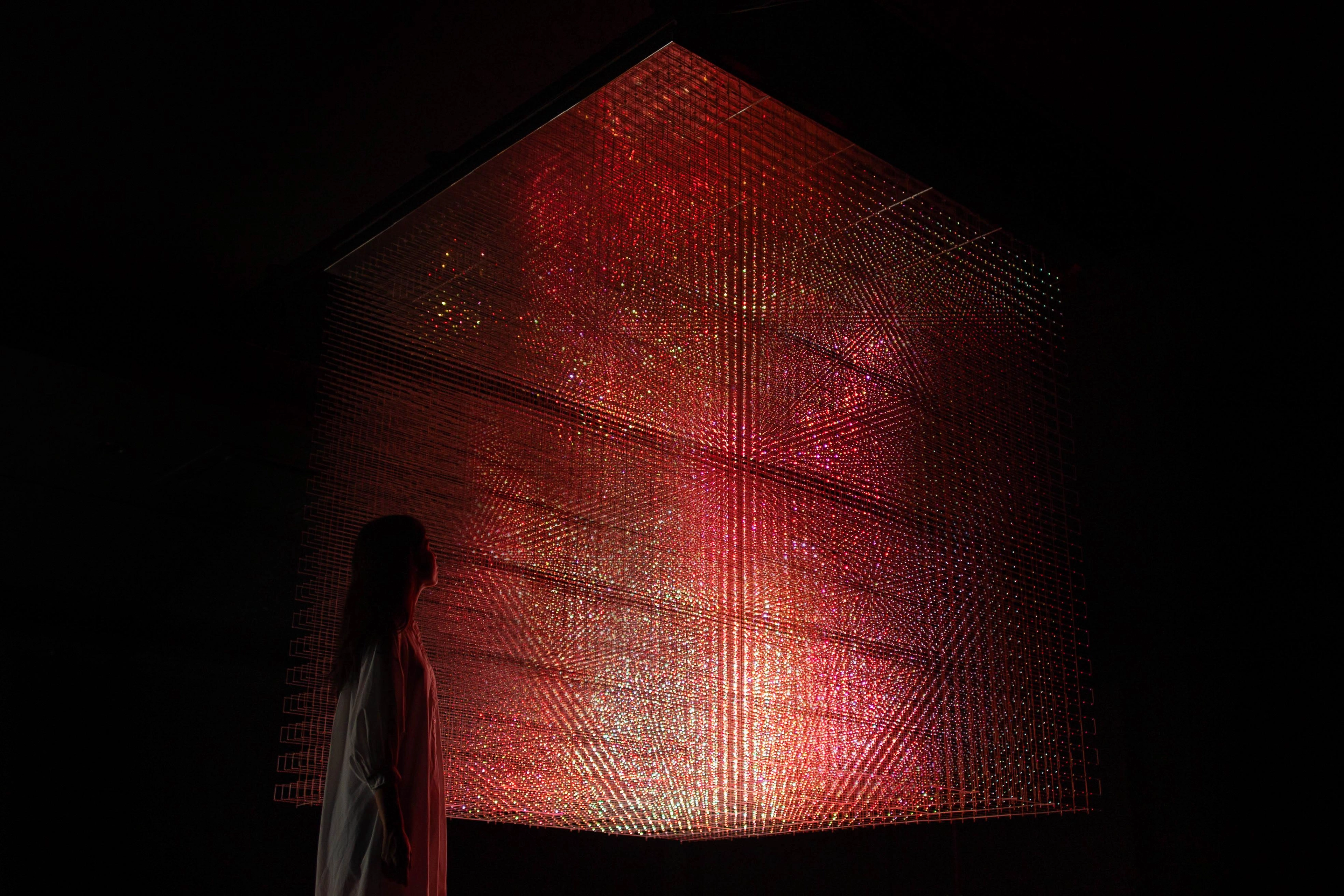
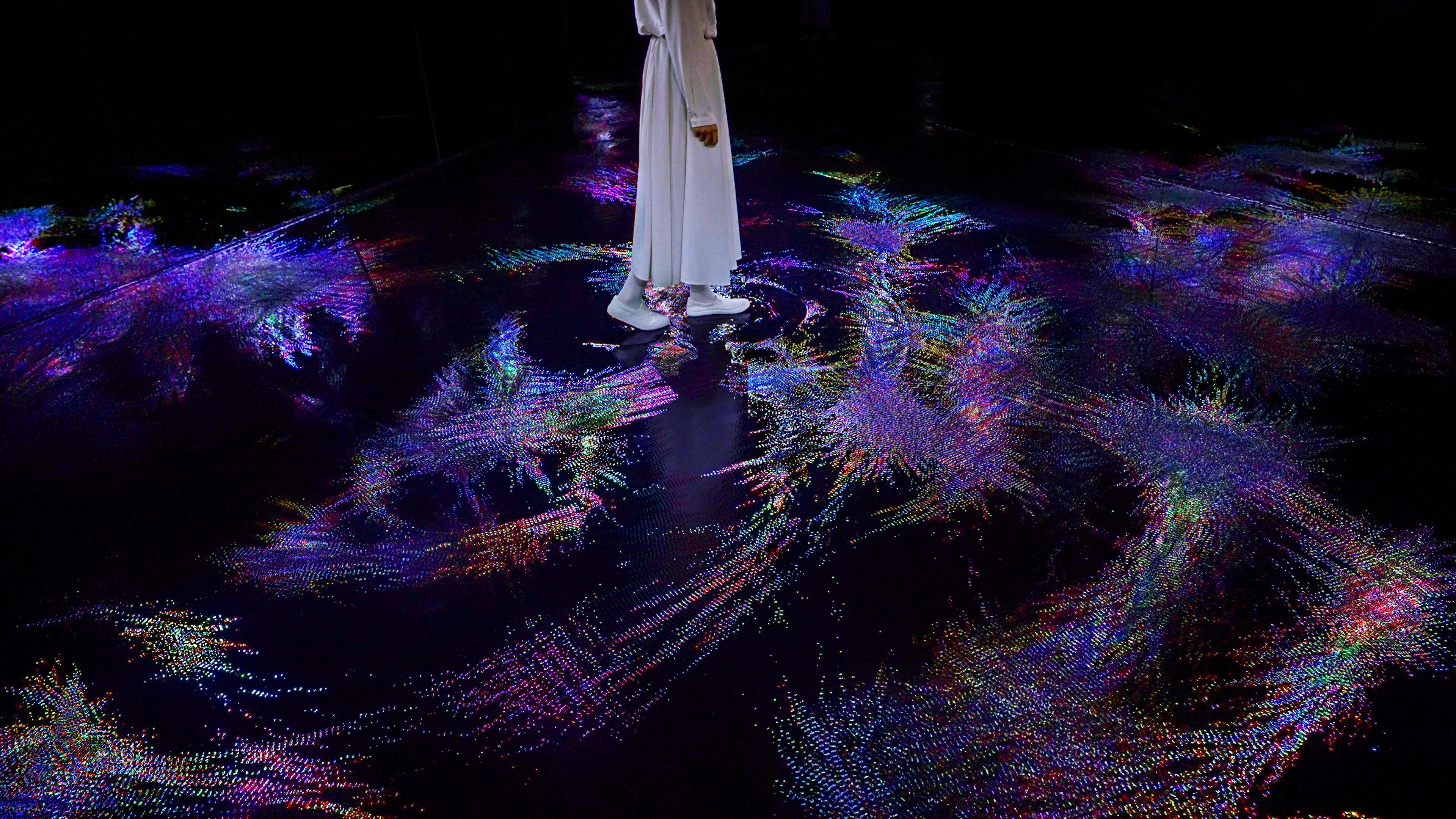
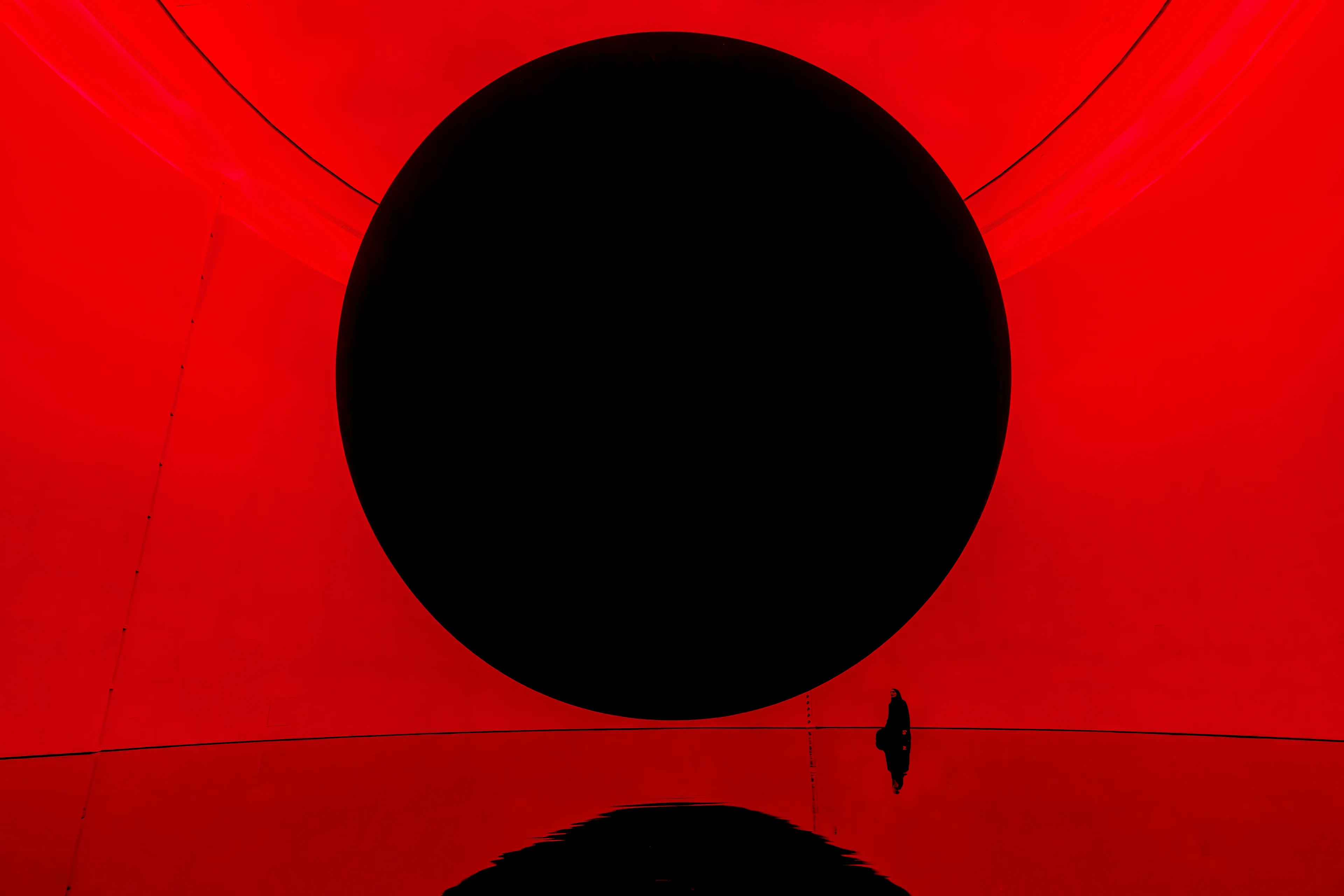
Light Sculpture of Flames

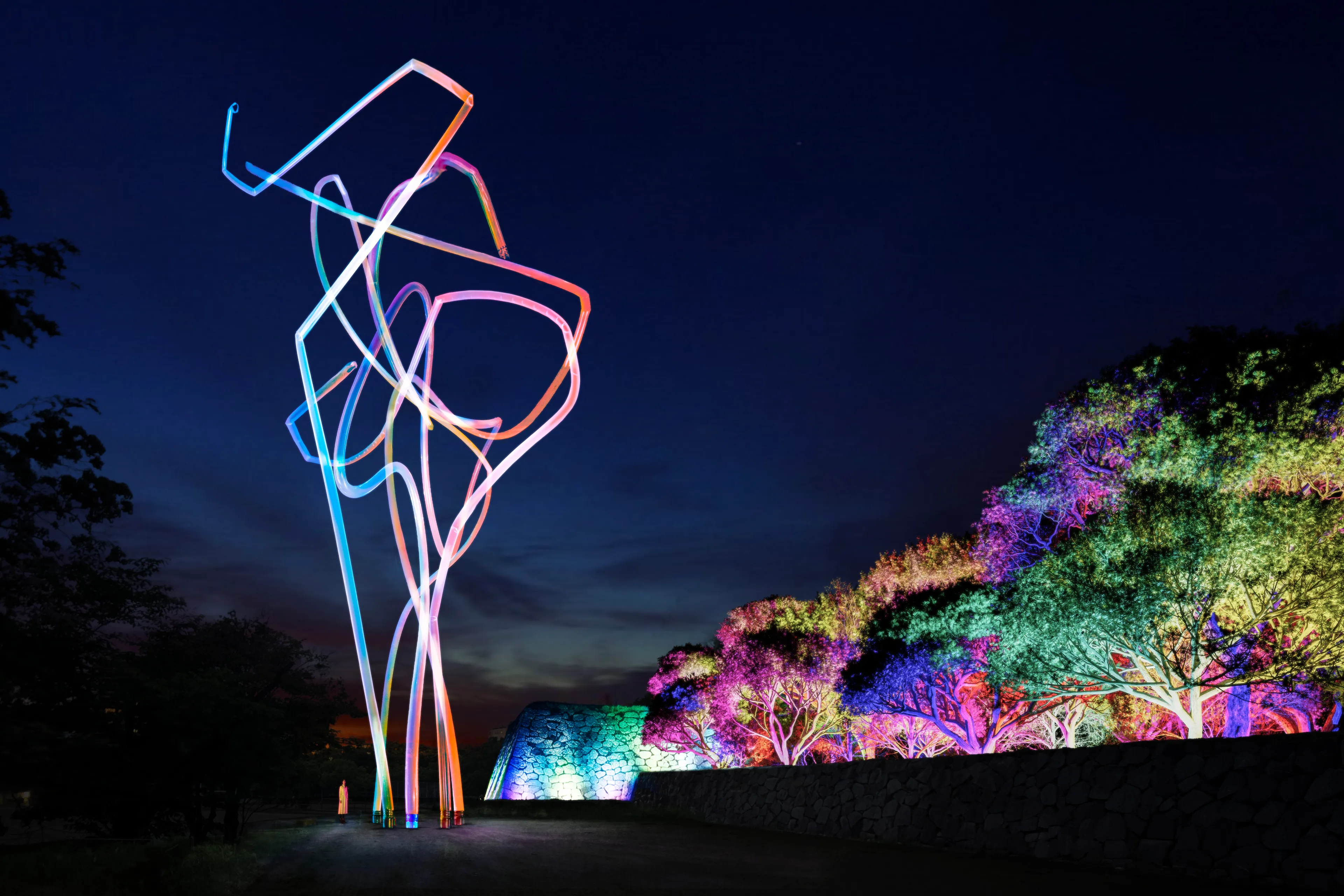
Pointillism is a genre of paintings that expresses the subject matter through a series of points. This interactive sculpture, however, consists of a set of points of light that are used to express three-dimensional objects. For this work, a three-dimensional interactive flame is produced by the points of light.
When people move close to the flames, the flames increase in intensity.
Flames are a phenomenon of light and heat generated by combustion, not a substance, but our sensory experience when we see a chemical reaction called combustion. People perceive the flame, a sensory experience, as if it were an object, and sometimes feel life in it.
Flames often appear to have a hierarchy of colors from their outside to the center: red on the outside, strong bright white on the inside, and dark in the center. In the case of a raw egg, the outer shell is white, the interior is transparent, and the center is yellow, but because it is a three-dimensional object, only the white shell is visible from the outside. Unlike an egg, the flame is a three-dimensional object made of light, and the strong bright white inside is still white when mixed with the red outside. Therefore, the flame, which is a three-dimensional object, appears as if it were a flat painting with a color hierarchy, no matter where you look at it.
By creating a three-dimensional flame with a collection of points of light, the three-dimensional flame sculpture moves back and forth between three and two dimensions.

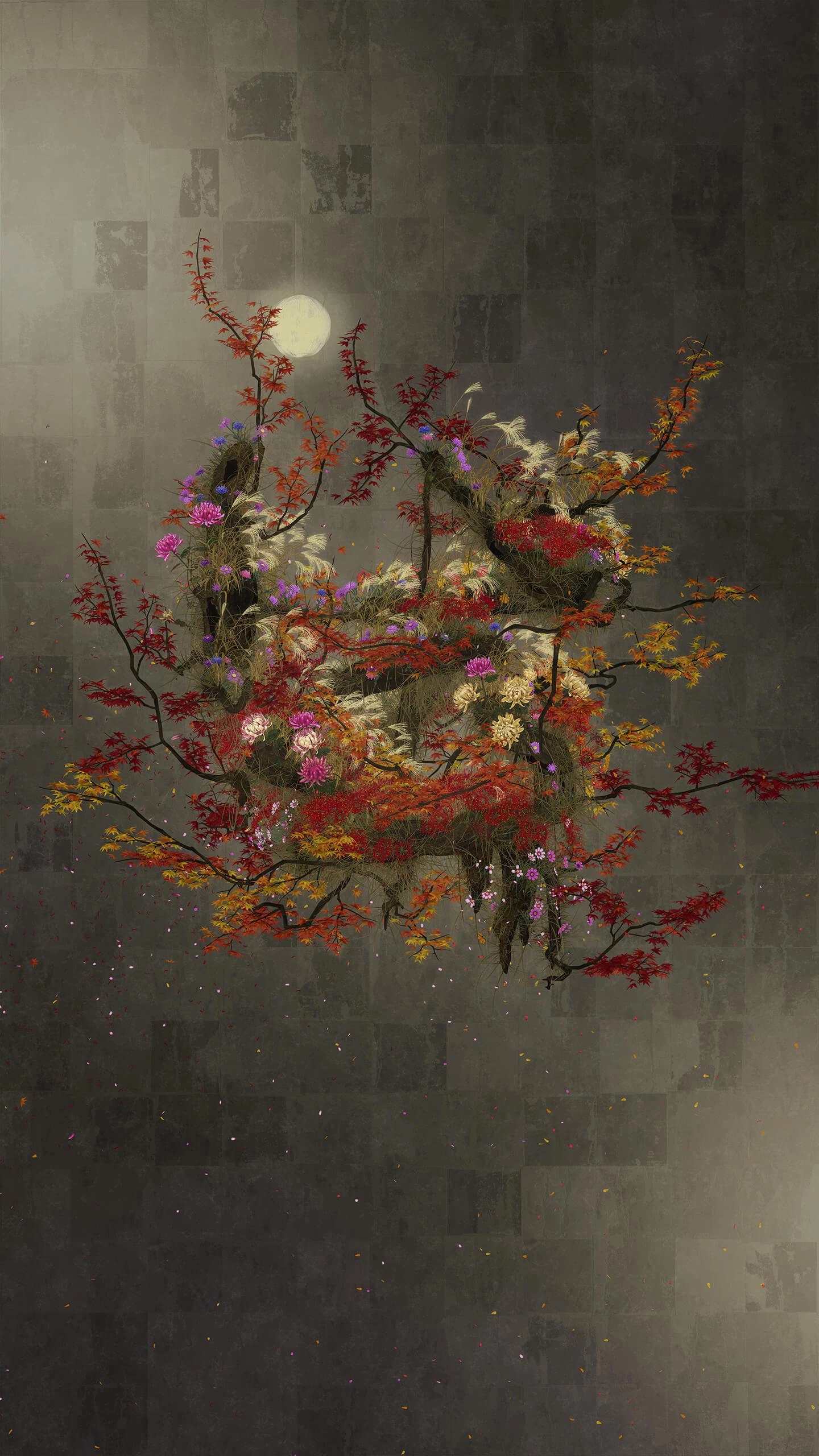
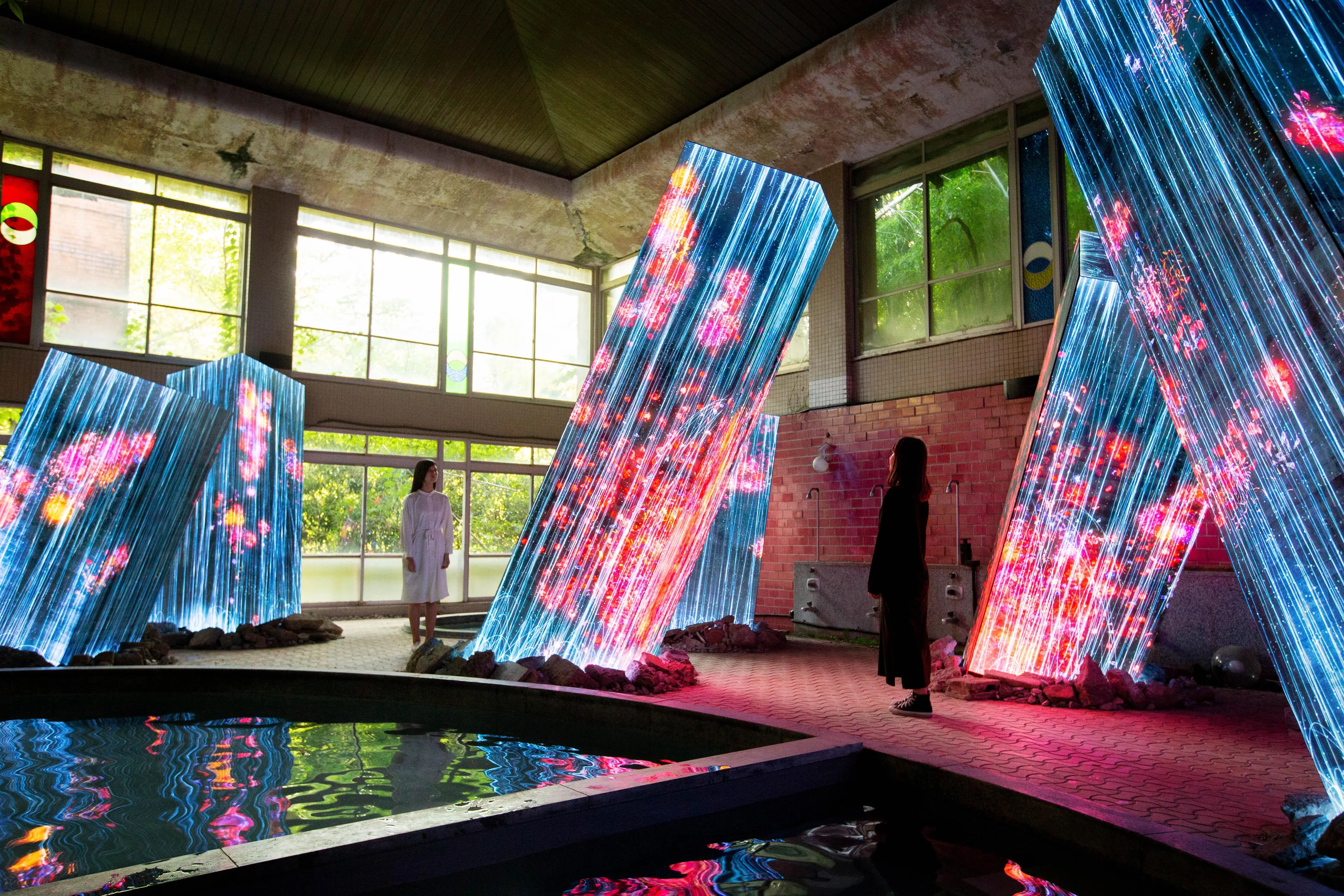
Life Survives by the Power of Life II

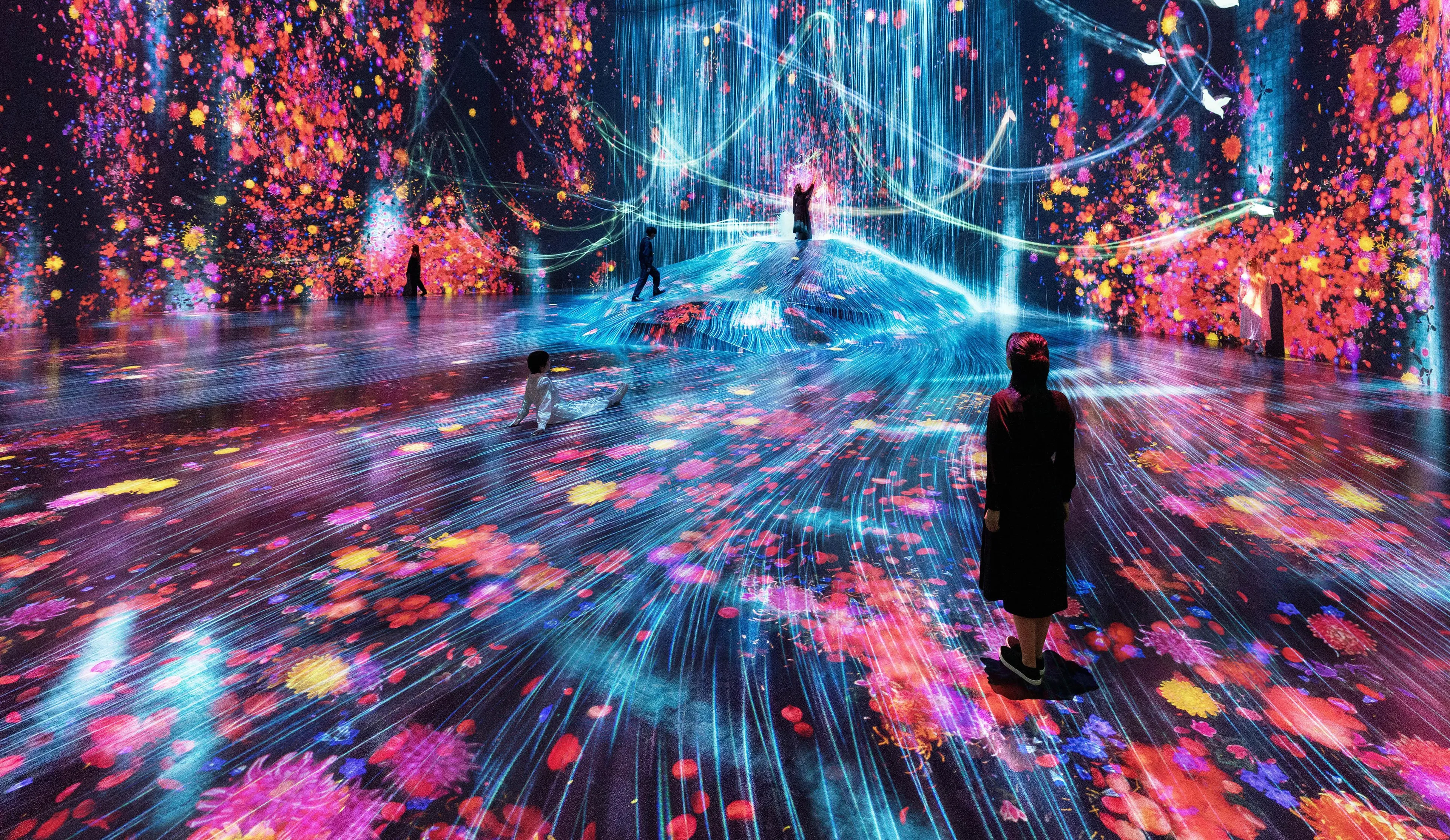
Life Survives by the Power of Life was released in 2011, the year of the Great East Japan Earthquake, where an earthquake, tsunami, and nuclear power plant accident overlapped. We have continued to create this artwork since its release in 2011, and over the course of 10 years, it has developed into a new artwork in which the transition of flowers and plants throughout a whole year repeats.
Self and the environment may appear to be two things, but in reality they are one and cannot be separated. The opposite of division may not be to integrate separate things, but to realize that what appears to be two were originally one.
The blessings and threats of nature, and the blessings and threats of civilization, are continuous and connected. There is no absolute malice anywhere, and yet not everything can be settled with just pleasant words. There is no easy solution, and our emotions are complex. Even so, we at teamLab want to affirm "Life" in all situations. Life is beautiful.
And life and death also appear to be two things, but in reality they cannot be separated. Within a long period of time, life has been supported by death, and death has supported new life, as life has been continuous.
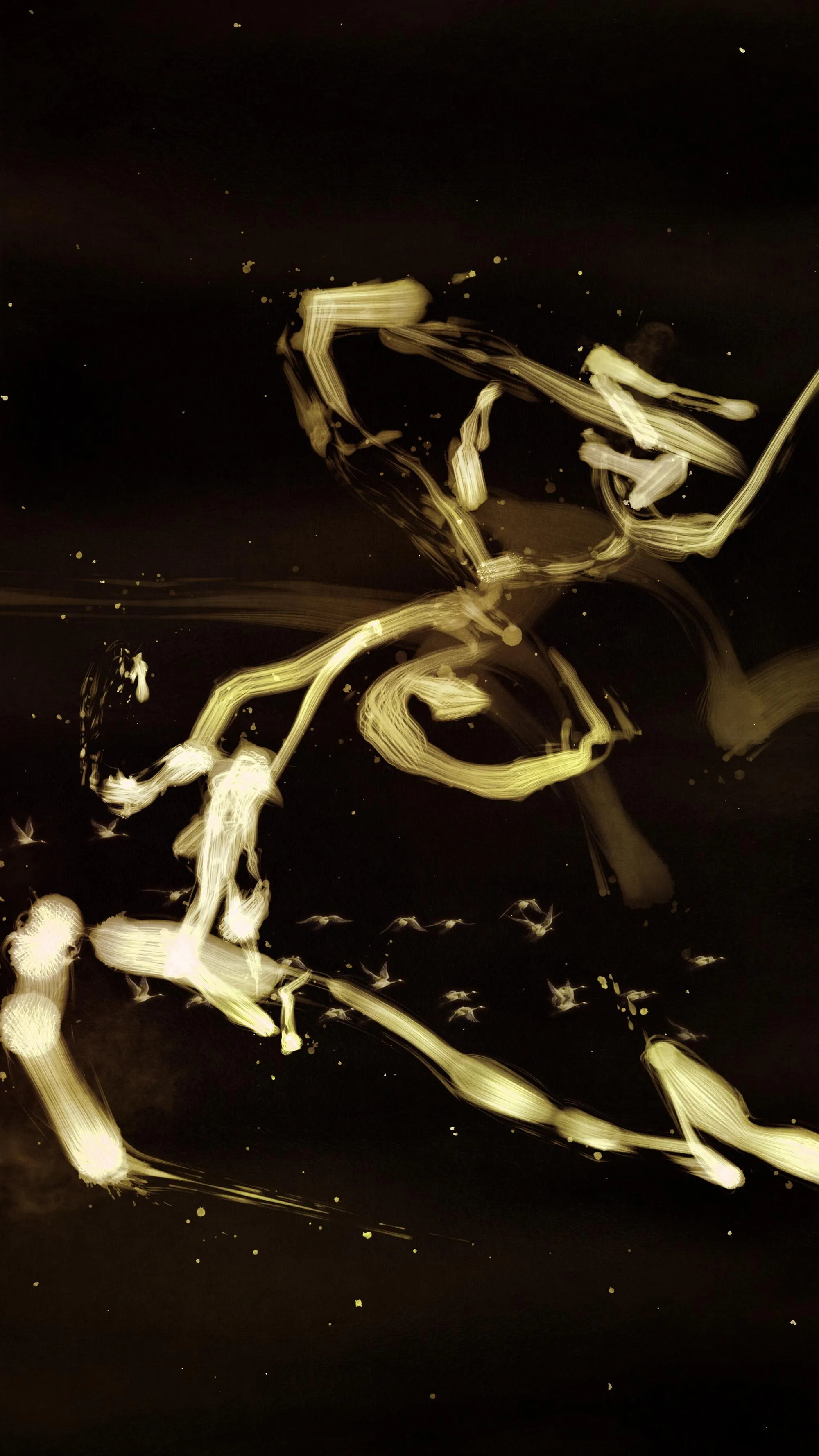
In this artwork, the character "生" (sei), which means life and living, is drawn three-dimensionally in space. The brush strokes evoke traces of life, and on the brush strokes hundreds of flowers and plants are born, bloom, scatter, and change.
The artwork is drawn through Ultrasubjective Space, the picture plane does not become a boundary that separates the world of the artwork and the space where the viewer is. The artwork space transcends the picture plane and is continuous with the space in which the viewer's body exists. Viewpoints exist in infinite numbers, and no matter where you cut out the picture plane, the space is maintained. Because all of the details continue to change constantly, the viewer's gaze never stays fixed on a single point but moves around.
By moving their gaze, the viewer continually re-composes the world of the artwork as it changes over time, and builds pictorial space within themselves.
เกี่ยวกับ teamLab
teamLab (f. 2001) is an international art collective. Their collaborative practice seeks to navigate the confluence of art, science, technology, and the natural world. Through art, the interdisciplinary group of specialists, including artists, programmers, engineers, CG animators, mathematicians, and architects, aims to explore the relationship between the self and the world, and new forms of perception. In order to understand the world around them, people separate it into independent entities with perceived boundaries between them. teamLab seeks to transcend these boundaries in our perceptions of the world, of the relationship between the self and the world, and of the continuity of time. Everything exists in a long, fragile yet miraculous, borderless continuity. teamLab’s works are in the permanent collection of the National Gallery of Victoria, Melbourne; Art Gallery of New South Wales, Sydney; Art Gallery of South Australia, Adelaide; National Gallery of Australia, Canberra; Amos Rex, Helsinki; Museum of Contemporary Art, Los Angeles; Asian Art Museum, San Francisco; Borusan Contemporary Art Collection, Istanbul; and Asia Society Museum, New York, among others. teamlab.art Biographical Documents

Tea House

Food&Shop画像
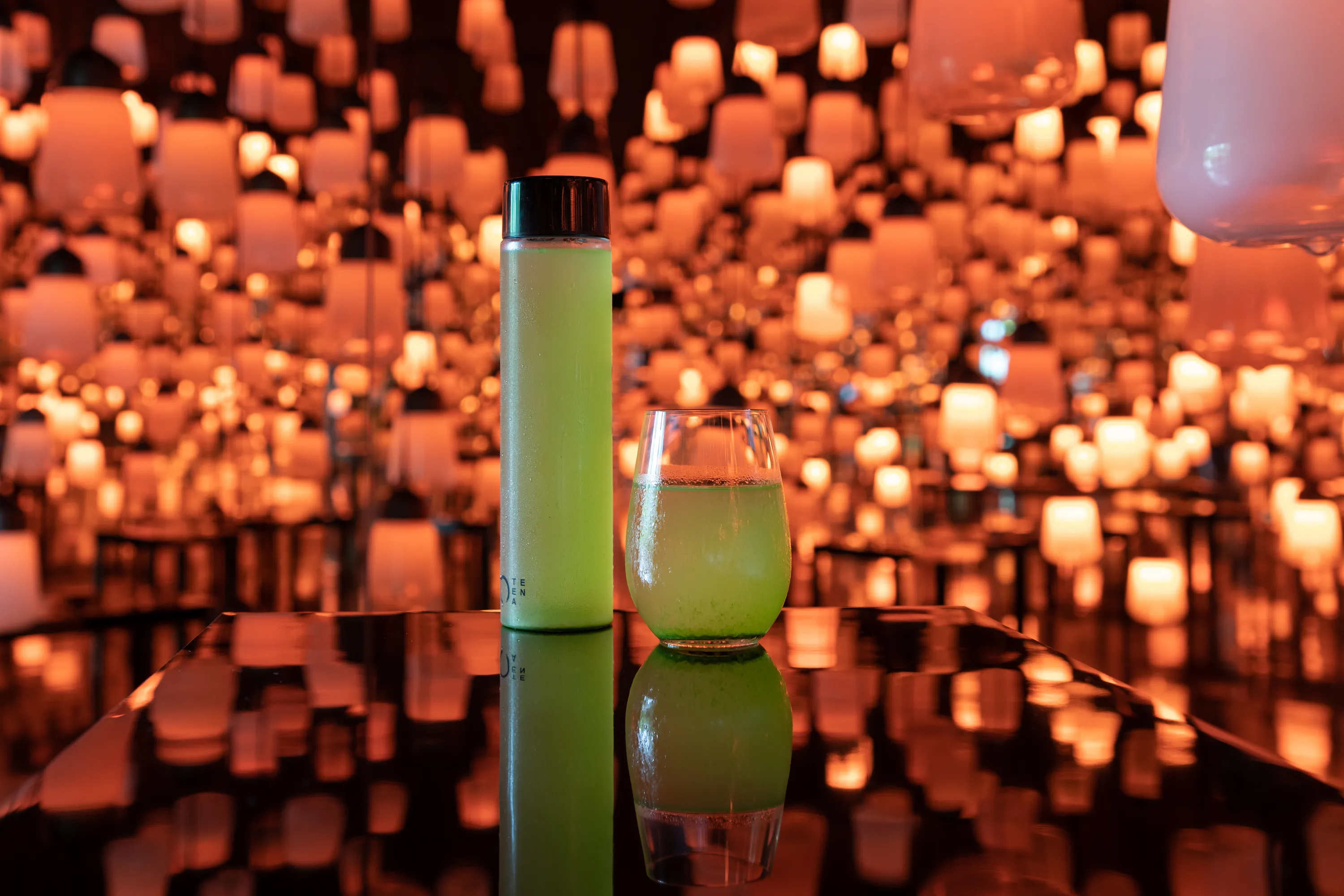
EN TEA HOUSE
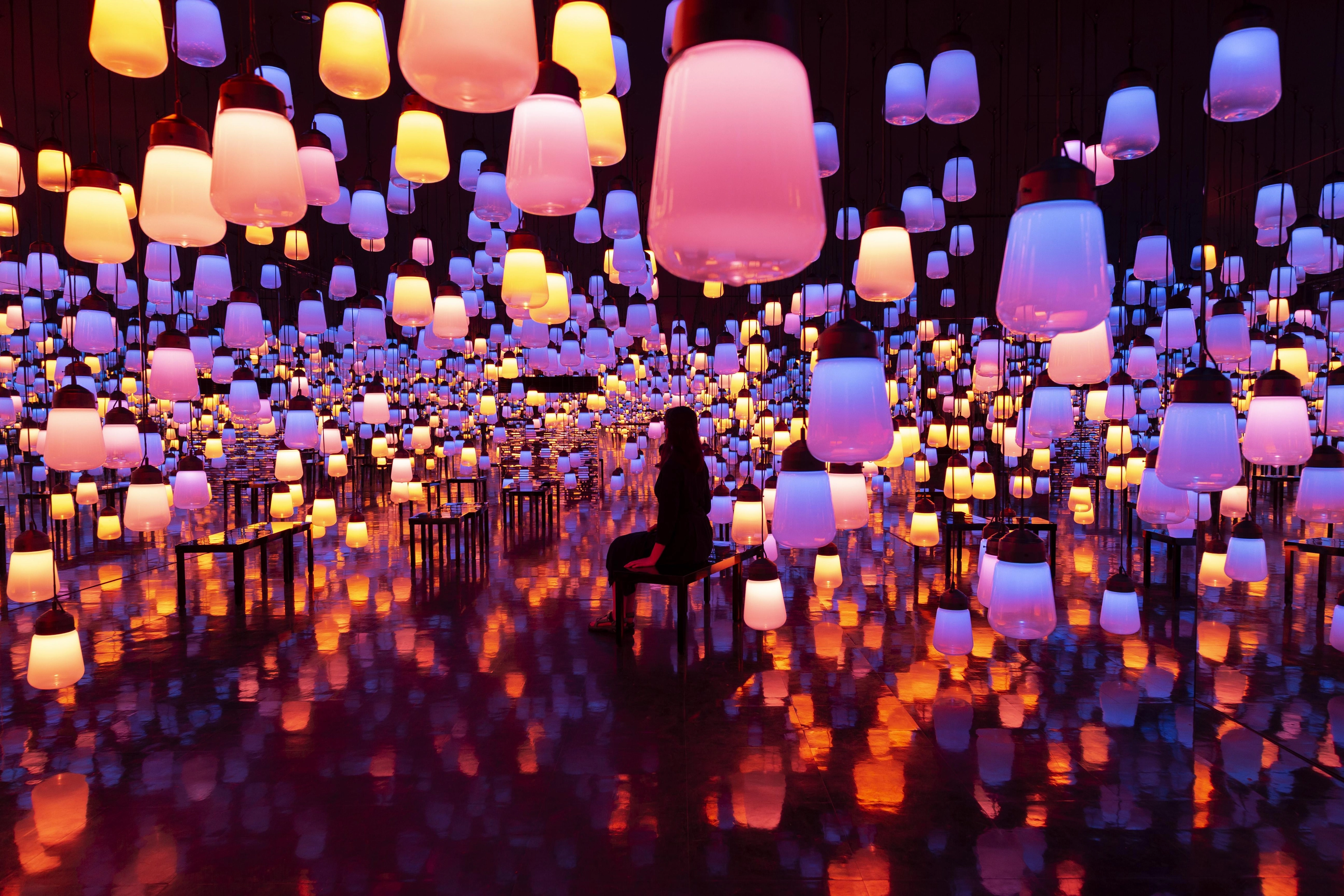
In the lobby, beneath the Resonating Lamps, there is a tea house.
ดูต่อ

เยี่ยมเรา

Venue Details

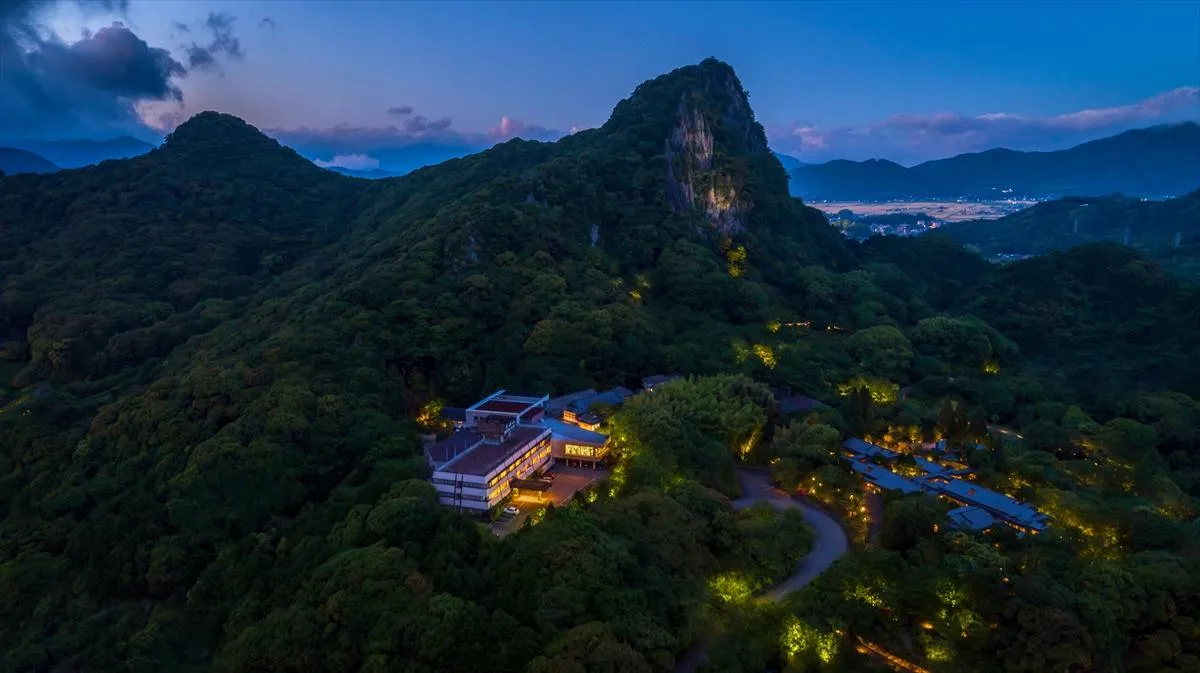
Mifuneyama Rakuen Hotel

ระยะเวลา

2018.7.19(Thu) -

วลาเริ่มงาน

24 ชั่วโมง
* Can only be accessed by Mifuneyama Rakuen Hotel or Onyado Chikurintei guests, EN TEA HOUSE - OTORO customers and ticket holders for teamLab Ruins and Heritage: Rinkan Spa & Tea Ceremony.
* EN TEA HOUSE - OTORO customers can view the work from 11:00 - 21:00 (last order at 20:30)
* Artwork cannot be viewed for several minutes at midnight.

ค่าเข้างาน

Free for guests staying at Mifuneyama Rakuen Hotel or Onyado Chikurintei.
For EN TEA HOUSE - OTORO customers, minimum one order per person to view the artwork.

การเดินทาง

สถานที่จัดงาน

Mifuneyama Rakuen
4100 Takeo, Takeo-cho, Takeo City, Saga, Japan

Address in local language:

御船山楽園
佐賀県武雄市武雄町大字武雄4100
By Train
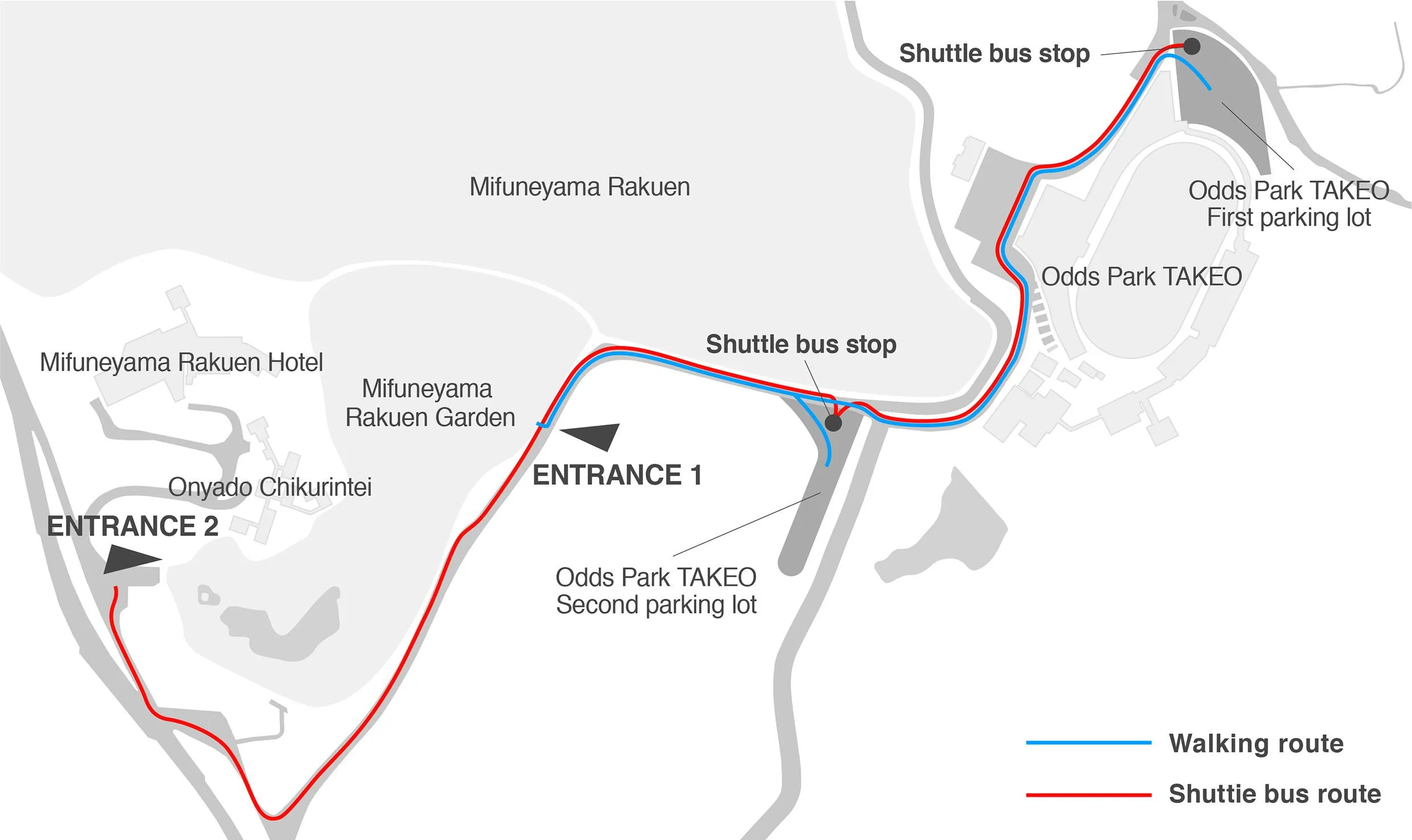
From JR Hakata Station: 70 min by train to JR Takeo Onsen Station. Take a taxi (5 min) or a bus (8 min) to Mifuneyama Rakuen stop. From JR Shin-Omura Station: 15 min by Nishi Kyushu Shinkansen to JR Takeo Onsen Station. Take a taxi (5 min) or a bus (8 min) to Mifuneyama Rakuen stop. From JR Takeo Onsen Station: 5 min by taxi or 8 min by bus to Mifuneyama Rakuen stop.
By Air
From Nagasaki Airport: 40 min by car to Mifunayama Rakuen. 15 min by Omura City Kamome Liner or 11 min by Nagasaki Kenei Bus to JR Sin-Omura Station. From Fukuoka Airport: 70 min by car to Mifuneyama Rakuen. 6 min by Fukuoka City Subway (Kuko Line) or 10 min by Nishitetsu Bus to JR Hakata Station. From Saga Airport: 50 min by car or 1 hour by shared taxi to Mifuneyama Rakuen.

ติดต่อสอบถาม

Mifuneyama Rakuen Hotel